
SubX.News® Street Report March 16, 2026
On a brittle late‑winter afternoon in Chicago, the city’s contradictions unfolded block by block, as visible and unyielding as the potholes that scar its streets.
Protected bike lanes—touted as emblems of progressive urbanism and equity—stood flooded and choked with debris.
Cardboard shelters hugged downtown buildings, their occupants exposed to temperatures in the 20s.
On the West Side, men and women moved with the slow, vacant stagger that locals now call “zombies,” bodies hollowed by fentanyl, tranq, and years of neglect.
These were not isolated scenes.
Taken together over the course of a single day’s drive on March 16, they formed a pattern in a city whose leadership has promised social justice but delivered, so far, mostly symbols that fail under the weight of reality.
Observations began just after 1:00 p.m. near 14th Street and Damen Avenue on the Near Southwest Side.
There, a newly installed protected bike lane looked like a shallow canal: water standing ankle‑deep along the entire stretch, plastic bags and trash floating like flotsam, patches of snow still packed into the “protected” space.
Similar flooding had appeared days earlier at Lake and Oakley and at 40th and Kedzie—each time the same story: misplaced or inadequate drains, no apparent snow removal, millions spent on infrastructure that becomes unusable the moment weather intervenes.
On the city’s books, the bike network looks like a success story. The Chicago Department of Transportation’s proposed 2026 budget includes roughly $82.6 million from the Vehicle Tax Fund, which helps pay for street and bike‑lane plowing.
During 2025, CDOT added about 12 miles of protected bike lanes, bringing the total to nearly 70 miles citywide, with another 23 miles of bikeways projected for 2026.
Advocates, including Streetsblog Chicago and the #PlowTheSidewalks campaign, have pushed to keep winter bike and sidewalk maintenance funded and argue that these routes should be cleared with the same priority as car lanes.
Despite those commitments, on Lake, Damen, and Kedzie, the “protected” lanes sat under several inches of frozen slush, forcing riders into traffic.
The budget lines and new‑lane mileage do not change the basic fact that, for much of the winter, infrastructure sold as protection functions more like a trap. If bike lanes are truly for safety and for the people, a city that cannot keep them clear has not met its own standard.
By mid‑afternoon the drive reached the Loop.
Around 5:15 p.m., on Ida B. Wells Drive near State Street—within sight of the former Robert Morris University campus—cardboard and tarps lined the sidewalk.
The wind cut through the thin barriers; the temperature hovered just above freezing.
These encampments were not tucked away in alleys. They sat on one of the city’s most trafficked corridors, steps from office towers and the route of the upcoming St. Patrick’s Day parade.
The contrast was stark: a city preparing to dump green dye into the river while its most vulnerable residents slept on concrete between a shuttered campus and a public library.
Officially, the numbers are moving in the right direction. The 2025 Point‑in‑Time count, conducted in January, estimated 7,452 people experiencing homelessness in Chicago—a 60 percent decrease from the 18,836 counted in 2024.
City officials largely credit the drop to a sharp reduction in new arrivals seeking shelter after changes in federal border policy, not to any sudden breakthrough in permanent housing.
Even with the lower headline figure, more than 1,300 people were still counted as unsheltered, and alternative estimates that include people who are doubled‑up or couch‑surfing put the annual number closer to 58,000.
Those cardboard homes on Ida B. Wells belong to that unsheltered group the statistics never fully resolve.
Chicago’s current administration took office promising a transformative approach to homelessness: a five‑year plan to make it “rare, brief, and non‑recurring,” a chief homelessness officer, millions earmarked for shelter upgrades.
Yet encampments like these persist.
The January 22, 2026 Point‑in‑Time count—conducted in subzero conditions—has not yet released full results, but prior‑year patterns suggest the unsheltered reality persists well beyond what any single‑night tally can capture. Whatever the spreadsheets say, cardboard remains a nightly reality.
As dusk settled, the route pushed west.
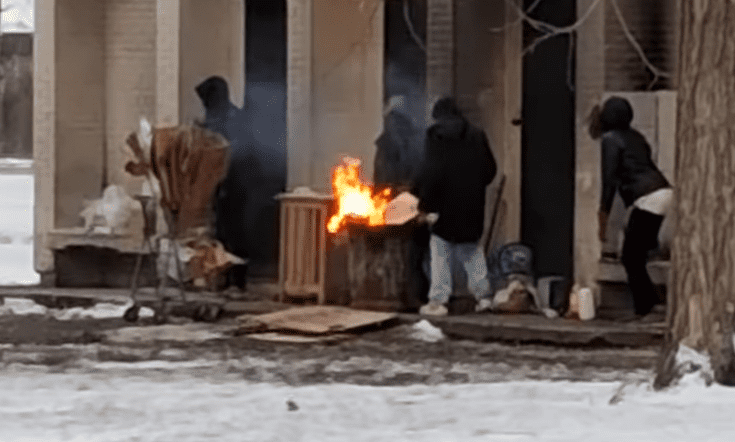
In a public park near Central Avenue and Lake Street, on the border of Oak Park, a group of men clustered in and around makeshift structures.
Scorch marks climbed brick walls where fires had burned, and a metal barrel at the park entrance served as an improvised fire pit amid snow, trash, and broken boards.
The park functioned less as an amenity and more as an open‑air drug site.
A similar inversion played out earlier in the day.
At a downtown library, security insisted that a middle‑aged man move out of an empty children’s section, yet tolerated a man openly smoking weed in the vestibule, intervening only to crack the door and let the smoke out.
The message was clear: rule‑following residents are easy to police; entrenched disorder is easier to ignore.
The most disturbing images surfaced just after 7:00 p.m. in an alley on the West Side near Kilbourn and Madison. Several individuals stood or slumped in various stages of intoxication and undress, seemingly pinned in place by powerful drugs.
“Zombies” is the word many residents now use—not as casual insult, but as a literal description of bodies frozen mid‑movement, eyes unfocused, mouths slack.
One man chewed at bark on a tree. One woman with her pants down, disoriented and exposed to anyone passing through the alley.
On paper, public‑health officials can point to progress.
A city Health Alert issued on January 2, 2026 warned of an early‑year spike in opioid‑related overdoses, but overall, Chicago recorded a 40 percent drop in fatal opioid overdoses in 2025 compared with the previous year.
At the same time, statewide reports show xylazine‑involved deaths rising by about 6.4 percent through 2023, and newer veterinary anesthetics like medetomidine have already triggered overdose clusters on the Westside.
Health authorities advise wider naloxone distribution and careful reporting of overdoses with unusual features.
Those curves and bulletins suggest a system trying to catch up.
The alley off Kilbourn and Madison suggests a crisis that still feels anything but contained.
Whatever the metrics, people there are literally coming apart in public, with little visible intervention beyond the occasional patrol car rolling past.
Across the hours-long drive, similar scenes repeated.
Abandoned lots in North Lawndale stretched for blocks while nearby Hispanic neighborhoods in Little
Village maintained pockets of functioning commerce.
Former migrant shelters on Cermak showed the marks of looting and poor planning.
Weekend violence—a young man shot in West Lawn, a person shot trying to stop a shoplifter at a downtown 7‑Eleven, a CPD sergeant shot in her car, an off‑duty officer shot at a gas station—received limited, fragmentary coverage.
On this March day, Chicago’s justice narrative collided with what the streets showed: flooded bike lanes that cannot safely carry a bicycle, cardboard villages standing beneath empty buildings, parks and alleys repurposed as unmanaged drug markets, neighborhoods effectively written off.
Social justice in Chicago has been articulated in plans, promises, and speeches.
When the rain falls, the lanes flood; when the cold bites, the cardboard appears; when the drugs flow, the zombies walk.
Until infrastructure drains, shelters open, and enforcement turns honest, the streets will keep telling the truth.
More than slogans and press releases, the streets will continue to show failing systems, exposed people, and promises still unkept.
No amount of influencer spin can cover up what is really happening in Chicago.
Real social justice will start only when what happens on the street matters more than what’s written on the podium.
Image: Open fire pit in Levin Park on the Westside with drug users only feet away from dealers near Central and Lake 615 p.m. March 16th 2026 SubX.News®
Editor’s Note: This report is based on a live feed video (3:31:38) drive on March 16, 2026, covering Michigan Ave, State Street, Lake Street, Madison Ave, Cicero, Pulaski, live broadcast radio, police traffic, and independent scanner feeds: https://youtu.be/Av5SGh2a3KY
Lazy mayor means you got lazy city employees 1020am March 16th 2026 https://youtube.com/shorts/nOZojAC3BJM
Lazy mayor means you got lazy city employees means you got crappy city services … there you go leaves have been down since November now we got snow and ice and it's flood time 10:20 a.m. March 16th 2026 it's Southside of Chicago pic.twitter.com/3USjwojyoB
— SubX.News® (@SubxNews) March 16, 2026
Bike lane scam flooded out and dirty 110pm March 16th 2026 14th and Damen https://youtube.com/shorts/RPC3arqj1WY
Bike lane scam flooded out and dirty ain't no way you're riding a bicycle on that 1:10 p.m. March 16th 2026 14th and Damen going south pic.twitter.com/DBnZTpZxwN
— SubX.News® (@SubxNews) March 16, 2026
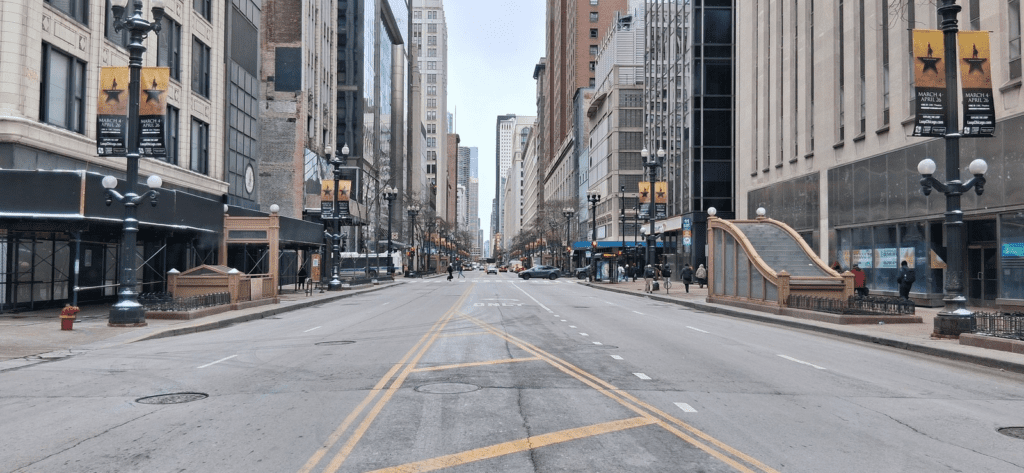
People in cardboard homes on Ida B Wells and State Street 515pm March 16th 2026 https://youtube.com/shorts/gI3cdQK-XQk
People are in cardboard homes here and it's in the twenties on Ida B Wells and State Street at the Bandon Robert Morris University about 5:15 p.m. March 16th 2026#ChicagoScanner pic.twitter.com/N0qCEh16Hf
— SubX.News® (@SubxNews) March 16, 2026
Public park in Chicago most of these guys are drug users Central and Lake 615pm March 16th 2026 https://youtube.com/shorts/PLwkXuEToqo
Public park in Chicago most of these guys are drug users near Central and Lake 615 p.m. March 16th 2026 #ChicagoScanner pic.twitter.com/gIvMVaNquD
— SubX.News® (@SubxNews) March 17, 2026
Westside zombies 7pm march 16th 2026 https://youtube.com/shorts/T73OgiEpgd0
Westside zombies about 7:00 p.m. March 16th 2026 pic.twitter.com/Fwaqte0qkW
— SubX.News® (@SubxNews) March 17, 2026
SubX.News® On-the-Spot Reporting
What did you see? Drop your own sightings, photos, and street reports below.
Tag #SubXStreetReport so we can track what City Hall misses
